Lies and prayers as consolation
The Lying Life of AdultsLies and prayers as consolation describes the double practice by which Giovanna tries to survive the strain of her parents’ crisis: she disguises distress from those around her and addresses a God in whom she does not believe. Neither practice resolves what is happening in her family. Their importance lies instead in the brief order they promise, and in the painful gap between that promise and the silence, separation, and fear that persist.
A cheerful face at home
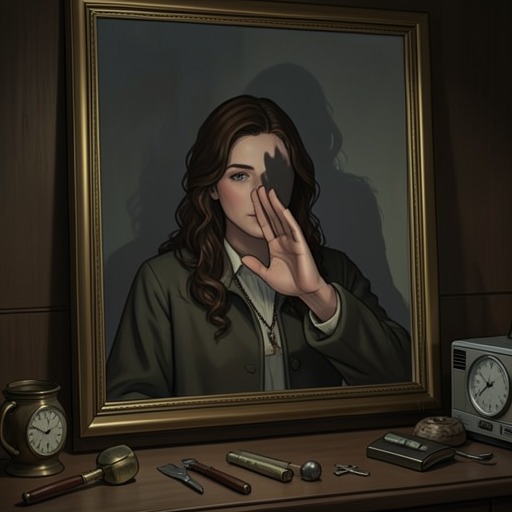
In the wake of the quarrel between her father and Mariano, Giovanna’s efforts to appear cheerful become part of daily life. She is unhappy, but pretends to be extremely happy both at home and at school. In the morning, seeing her mother’s face red around the nose and distorted by depression, she tells her that she looks nice. The compliment is less an expression of what Giovanna sees than an attempt to keep despair from becoming the only thing spoken between them.
She performs a related kindness toward her father, who has abruptly stopped studying. In the morning he is ready to leave early; in the evening he returns pale and dull-eyed. Giovanna brings him school exercises, even though they are not complicated, as if he might still want to help and his attention were not elsewhere. The invented need for his assistance lets her maintain an image of ordinary family life even as his distraction makes that image difficult to sustain.
These small acts do not mean Giovanna is unaware of the trouble. She knows more than her friends Angela and Ida about the secrets entangling her parents and their acquaintances, and finds that knowledge exhausting. Rather than continue confiding in them over the telephone, she withdraws. She fears that one wrong word could open a dangerous passage from what she suspects to the facts themselves. Her silence and her cheerful lies thus serve the same defensive purpose: each keeps an intolerable understanding from being fully spoken.
Prayer against what she fears
Although Giovanna continues not to believe in God, she prays as if she does. She asks that the fight between her father and Mariano concern Marxism and the end of history, not information she had given Vittoria. At first, the fact that Mariano attacked her father seems to support the hope that Vittoria did not repeat Giovanna’s confidences. But the explanation soon begins to fail. Giovanna wonders why her father used a dialect he normally did not speak, why Costanza left the house, and why her father—not Costanza’s husband—ran after her.
She constructs a more frightening account behind the visible quarrel: Vittoria may have told her father what Giovanna had said; her father may then have confronted Mariano; and Costanza may have learned something about her husband’s contact with Giovanna’s mother. These are Giovanna’s suspicions, not facts she can confirm. Prayer gives her a way to ask for a less devastating explanation even while the details she observes keep drawing her back toward the one she fears.
The white-gold bracelet sharpens this conflict between what Giovanna knows and what she can admit to herself. After the quarrel, Costanza visits and appears remorseful; her gesture seems to offer Giovanna a gift, but her mother calls it a restitution. Costanza’s mother helps fasten the bracelet on Giovanna’s wrist, and Giovanna now wears it day and night. The unexplained transfer, and the glances and gestures around it, make the bracelet a material reminder of the family dealings her prayers cannot simply undo.
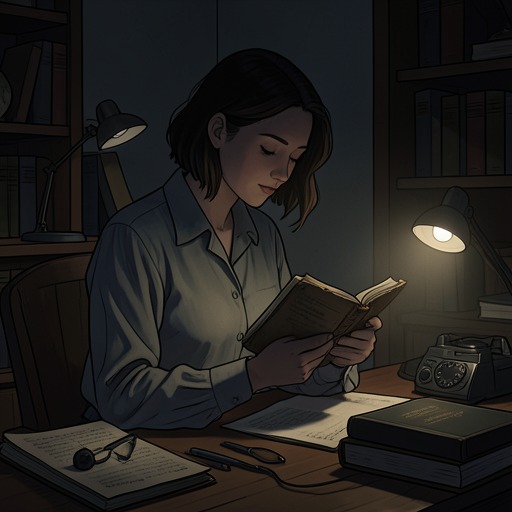
At night, Giovanna asks God to restore order, admitting in her prayer that she should not have insisted on meeting Vittoria or gone against her parents’ wishes. The plea treats her own disobedience as a possible cause of the crisis and restoration as something God might still grant. Its scale is striking: if order is not restored, she imagines San Giacomo dei Capri tumbling onto the Vomero, then the Vomero onto the whole city, which would drown in the sea. Prayer turns private fear into an imagined collapse of the world around her.
The silence prayer cannot break
Giovanna’s anguish is physical as well as inward. In the dark she feels such weight in her stomach that she gets up to vomit. She deliberately makes noise, hoping her parents will come to help, but they do not. A strip of light outside their bedroom shows her that they are awake; she concludes that they no longer want to concern themselves with her. Their murmuring continues through the night, punctuated by her mother’s sharp syllable and her father’s distant thunder, and morning brings an exhausted silence at breakfast.
Her prayer escalates from a request for repair to a desperate wish that something—anything—happen. She imagines her own death as a shock that could reconcile her parents, followed by her resurrection into a happy family. This is not a solution but a measure of how completely she feels trapped between their private conflict and her inability to intervene. Lies may let her show a cheerful face by day; prayer gives her words for the anguish that she otherwise cannot make her parents hear.
In a later phase, the consoling pair remain closely linked. During the summer, Giovanna conceals from Angela and Ida that she has failed to advance and is repeating her first year of high school. Her parents’ separation and their furious dispute over dividing their belongings add to her humiliation: she lies to protect them from shame and to hide her belief that she has not inherited their abilities. She comes to feel that praying and lying offer the same consolation, even as the need to fabricate wounds and depresses her.
That consolation increasingly gives way to isolation. When Ida calls, Giovanna has her mother say she is not home, though she would rather have spoken with Ida than Angela. She prefers not to speak even to her mother. At school she dresses and makes herself up to look dissolute among respectable students, keeps teachers at a distance, and behaves sullenly; at home, she plays loud music and dances furiously, refusing to answer neighbors who complain. The social performance is no longer simply a bright mask: her withdrawal and defiance make visible a distress that her earlier lies were designed to cover.
A failed magic
Later, in conversation with Don Giacomo, Giovanna is asked whether she has prayed despite not believing. She says yes. When he asks whether it helped, she answers that it did not: it is a magic that ultimately fails. The exchange gives a concise name to the contradiction present in her earlier nights. She has prayed earnestly for family order, and prayer has helped her endure uncertainty, but it has not made the feared circumstances disappear.
Don Giacomo’s own words reinforce the weariness of the exchange: he says that he is worn out and that prayer seems to have become his trade. Giovanna, embarrassed after calling prayer a failed magic, wants to apologize for saying whatever comes into her head. The moment does not turn disbelief into faith or settle the family crisis. Instead, it brings her private practice into speech: prayer can remain a form of address even when belief is absent and the hoped-for answer never arrives.
Consolation and its limits
The recurring lies are chiefly lies Giovanna tells herself, but her false cheerfulness also shapes what she says to her parents, while her school failure compels her to conceal the truth from friends. Prayer works in the opposite direction: it gives voice to fears that she otherwise suppresses, yet she directs those pleas toward an absent or doubtful listener. Together, the practices let her inhabit two accounts of her life—one in which the family can still appear intact, another in which it may collapse—without reconciling them.
The motif’s development is marked by that failure of reconciliation. Early prayers ask for explanations and restoration; the imagined drowning of the city makes the stakes of non-restoration immense. Later, after further family and school upheaval, Giovanna recognizes lying and praying as parallel comforts, then names prayer as unsuccessful magic to Don Giacomo. The practices endure not because they solve her troubles but because they give her temporary forms for concealment and appeal. Their limit is equally clear: neither can make her parents come to her in the night, restore the certainty she wants, or turn her own account of events into knowledge she can safely speak.